Laid the foundation for our early AI UX: one design framework across four teams, and one place for users to get help.
Problem space
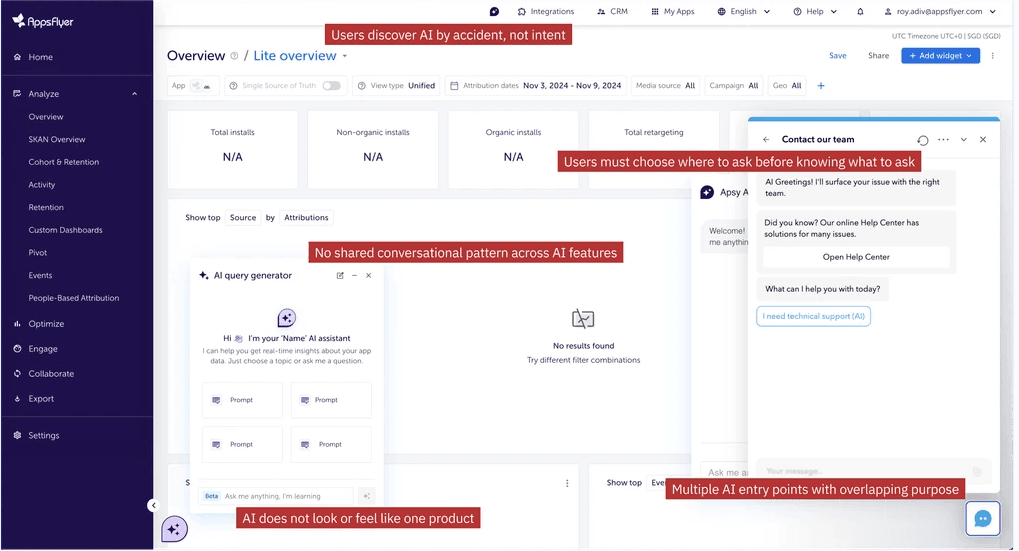
Users had to know where to ask before they knew what to ask.
4 teams were shipping AI features independently, creating 6 different interaction patterns and 3 competing visual languages
Before
From Siloed AI Features to a Unified Platform Experience
Design Goals
• Unified AI design across 4 teams with shared components, patterns, and governance
• Establish a single AI interaction model that scales across all products without team-by-team negotiation.
• One place for users to get help, with AI handling requests in the background.
Solution
Support data, go-to-market feedback, and usage analytics showed recurring friction and discoverability issues across all four teams.
I brought together designers from four teams to map the fragmentation and align AI feature owners on a shared roadmap. I then sent designer ambassadors to bring product managers into the same sessions, so both sides looked at the flows together. We defined a shared interaction model, shared components, and governance, so each new AI feature follows the same rules. The lasting value was the foundation and the collaboration: teams built on shared patterns without renegotiating them for each feature.
After
Creating a Unified AI Design Language
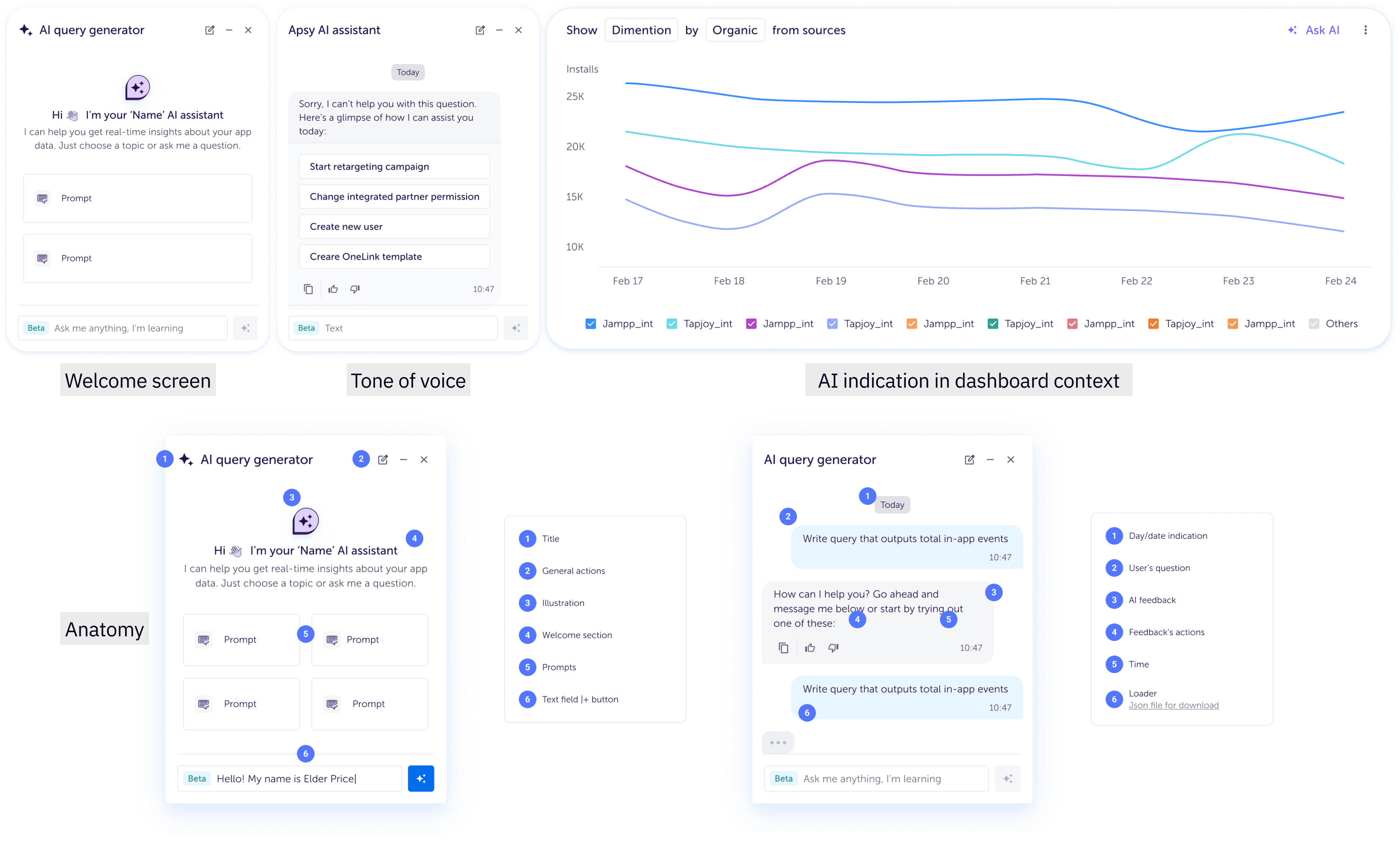
One place to ask. The AI assistant answers questions in natural language. Ask for your top campaigns by return on ad spend and get a clear, structured table for the last seven days. Embedded directly in the dashboard, it works within each widget and surfaces relevant questions to guide your next move.
The weekly recap goes a step further. It highlights what changed and points to where to look next.
After
AI embedded throughout the user journey

Outcome
The company launched the unified experience in fall 2025 and kept it. Support volume fell 30% as the AI conversation took on requests that used to become tickets. It pointed toward more proactive AI.